

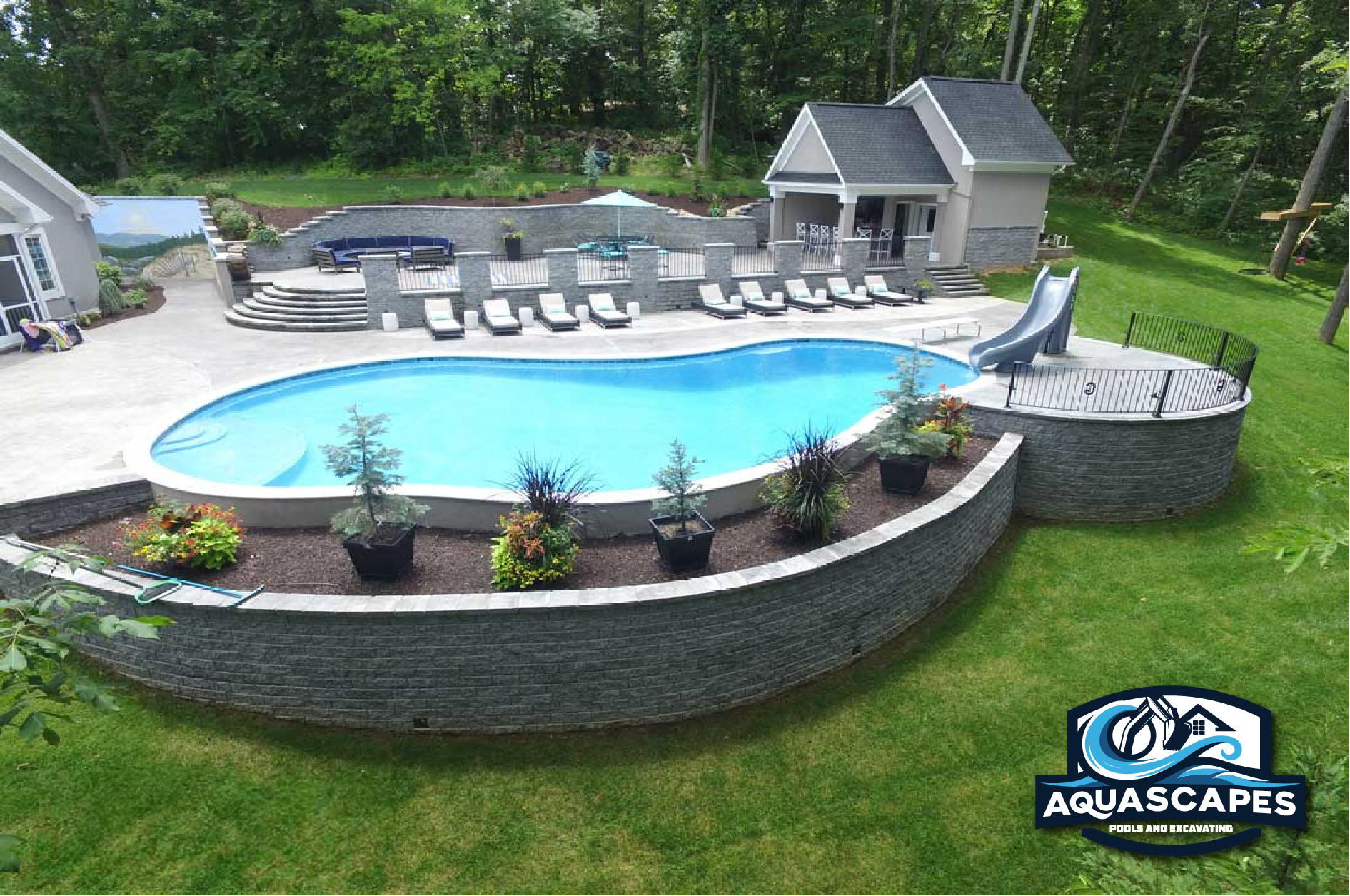
A sloped West Chester backyard required significant grading and a structural retaining wall before pool installation could begin. Aquascapes handled the full scope — excavation, retaining wall, and pool build.
Client
Residential Homeowner — West Chester, OH
Date
March 12, 2026
Services
Retaining Wall Construction, Excavation, Pool Installation
Share on
When the West Chester homeowners first called us, they'd already been told no by two other contractors. The problem was their backyard — a significantly sloped property with a grade change of nearly six feet from the back of the house to the rear property line. Both previous contractors had assessed the site and concluded that installing an inground pool wasn't feasible without extensive, expensive site work that was outside their scope.
We looked at it differently. Aquascapes isn't just a pool company — we're a full excavation and site work crew. Sloped properties, retaining walls, and complex grading are things we do alongside pool installations regularly. When we visited the site, we didn't see an impossible project. We saw a straightforward plan: grade the upper tier, build a structural retaining wall to hold it, and install the pool on the leveled lower section. One crew, one project.
The property's slope ran from the back corner of the house down toward a natural drainage swale at the rear. The homeowners wanted the pool in the lower section of the yard, which actually worked in our favor — it meant the pool would sit at the natural low point where water was already flowing away from the house. The challenge was stabilizing the upper tier so it wouldn't erode into the pool area and creating a clean, level transition between the two levels.
We developed a plan that involved cutting into the upper slope to create a level pad, constructing a structural retaining wall along the cut line, and then excavating for the pool on the lower tier. The retaining wall would need to handle significant soil load, so engineering it correctly from the start was non-negotiable. We assessed the soil type, calculated the load requirements, and designed a wall that would hold for decades without issue.
We started with the upper tier work — cutting back the slope, removing excess soil, and establishing the finished grade for the upper yard area. This phase generated a significant amount of spoil, all of which we hauled off the property so it wouldn't interfere with the retaining wall construction or pool excavation phases. The upper tier was rough-graded to drain away from the retaining wall and toward the side of the property.
With the upper tier established, we moved to the retaining wall footings. We dug the footing trench below the frost line — a critical requirement in Ohio where ground freeze and thaw cycles exert tremendous pressure on below-grade structures. The footings were poured and allowed to cure before we began laying block. Skipping or shortcutting the footing work is one of the most common reasons retaining walls fail prematurely, and it's something we never compromise on.
The retaining wall was constructed in courses of structural block, with proper batter — a slight backward lean into the slope — to counteract the horizontal soil pressure behind it. We installed drainage aggregate and a perforated pipe behind the wall during construction to manage hydrostatic pressure. Without proper drainage, water builds up behind a retaining wall and dramatically increases the load it's holding. With good drainage, the wall is doing the job it was designed for and nothing more.
The wall came in at just over four feet of exposed height along most of its run, with a capped top course that gives it a clean, finished appearance. The homeowners had the option to add planters or landscape features along the top of the wall later — we left that space clean and accessible for whatever they decided to do with it. The finished wall looks like a designed feature of the yard, not a remediation project.
With the retaining wall complete and the lower tier properly graded, we moved into pool excavation. The lower section of the yard was already close to the grade we needed, so excavation was efficient. We dug to the correct depth and dimensions for the chosen pool shell, carefully managing the proximity to the retaining wall footing and making sure the pool excavation didn't undermine the wall's structural base.
Pool installation proceeded in the standard sequence — shell placement, plumbing runs, equipment pad, backfill, and final water fill. We installed a quality equipment package including a variable-speed pump, cartridge filter, and LED lighting. The equipment pad was positioned on the upper tier level, tucked neatly against the retaining wall where it's accessible but not visually prominent from the pool deck.
Once the pool was filled and equipment tested, we completed finish grading around the entire project area. The lower tier around the pool was graded to drain away from the pool deck and toward the property edges. The upper tier was final-graded and left in clean condition for the homeowners to sod or landscape as they chose. We hauled all remaining debris and excess material off the property, leaving the site clean and ready for the next phase of the homeowners' backyard plans.
What was once an unusable, awkward sloped backyard is now a fully functional two-tier outdoor living space. The upper level provides a flat lawn area and clean sightlines to the pool below. The pool sits level, well-drained, and beautifully positioned in the lower tier with the retaining wall serving as a natural backdrop. The homeowners have exactly the backyard they were told they couldn't have.
This project is a good example of what separates Aquascapes from companies that only do pools. Our excavation background means we can solve site problems that other pool contractors can't — or won't. If you've got a challenging property and you've been told a pool isn't possible, give us a call before you accept that answer. We might see it differently.
